

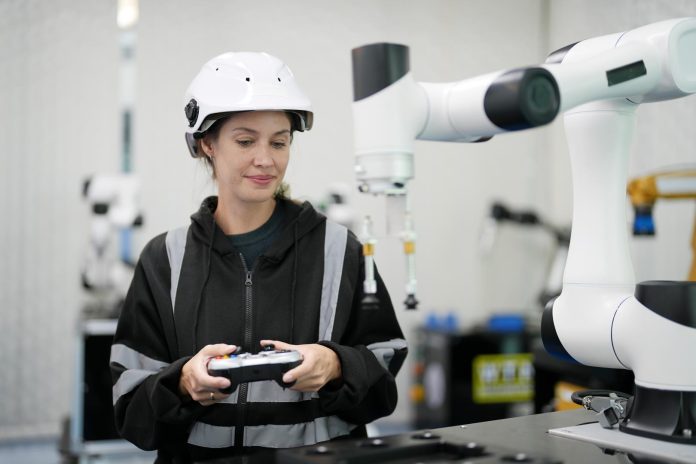
Cobots (Collaborative Robots) are robots that can interact with and work alongside humans in industrial settings. Unlike traditional industrial robots, cobots are more flexible, programmable, and can often work in the same environment as humans. These features make it easier to integrate human labor into manufacturing processes.
Collaboration with Cobots: Advantages and Challenges
Cobots have become a significant element of industrial innovation. While traditional industrial robots typically operate within limited spaces, cobots are more flexible and capable of performing various tasks. This presents great opportunities to optimize production processes and enhance the competitiveness of businesses. Additionally, cobots enable human workers to focus on more creative and complex tasks, thus fostering innovation.
Collaboration with cobots can occur in different models
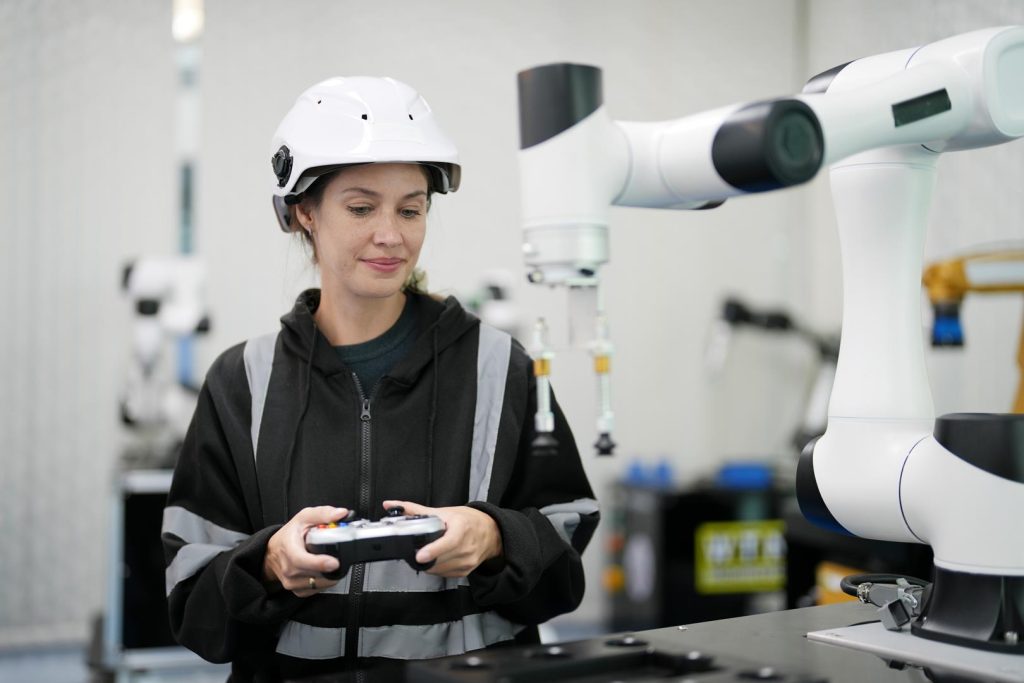
Collaboration with cobots: Advantages and Challenges
Collaboration with cobots offers a range of advantages in industrial processes, including increased productivity, flexibility, workplace safety, and quality control. However, there are also some challenges to collaborating with cobots. Concerns about safety in human interaction, technical complexity, and compatibility issues can hinder the widespread adoption of cobots.
Collaboration with Cobots in the Future
In the future, collaboration with cobots will become even more widespread and will become an integral part of industrial processes. This will enable businesses to become more flexible and efficient, and allow people to focus on more creative and valuable tasks. However, for this transformation to be successful, technology development, education, and appropriate regulatory frameworks need to be properly managed.
Cobots: Collaborating with Pioneers of Industrial Innovation
The Star of Industry 4.0: Industrial Collaboration with Cobots
However, collaborating with cobots in industrial settings also brings along some challenges. Ensuring safe interaction with humans, technical complexity, compatibility issues, and investment costs are among the issues that may hinder widespread adoption of cobots. Therefore, it is important for businesses to consider these challenges and develop appropriate solutions while collaborating with cobots.
Collaboration with Cobots: The Future Paradigm of Manufacturing
Collaboration with cobots is an essential component of Industry 4.0 and offers significant opportunities for enhancing businesses’ competitiveness. However, for this transformation to be successful, proper management of technology development, education, and regulatory frameworks is required.

