

The Coronae Heating Problem and the Extreme Temperature of the Solar Corona
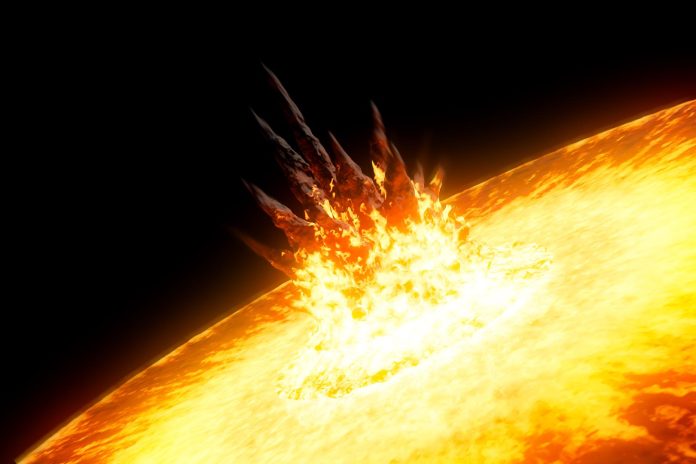
The corona, the outer atmosphere of the Sun, is one of the most intriguing features of the Sun. However, the corona has higher temperatures than the solar surface, creating a phenomenon that has puzzled scientists for many years. This phenomenon is known as the ‘coronal heating problem.’ The question of why the solar corona is excessively hot has captured the curiosity of astrophysicists, leading to a series of research efforts.
What is the Solar Corona?
The solar corona is a plasma layer that forms the outer atmosphere of the Sun, usually invisible but becoming visible during solar eclipses. This layer is located thousands of kilometers away from the solar surface and can reach temperatures in the millions of degrees. Interestingly, the surface of the Sun has lower temperatures in comparison.
Interaction Between Solar Winds and Earth’s Atmosphere: Formation of Geomagnetic Storms
Coronal Heating Problem: The Mysterious Temperature of the Sun
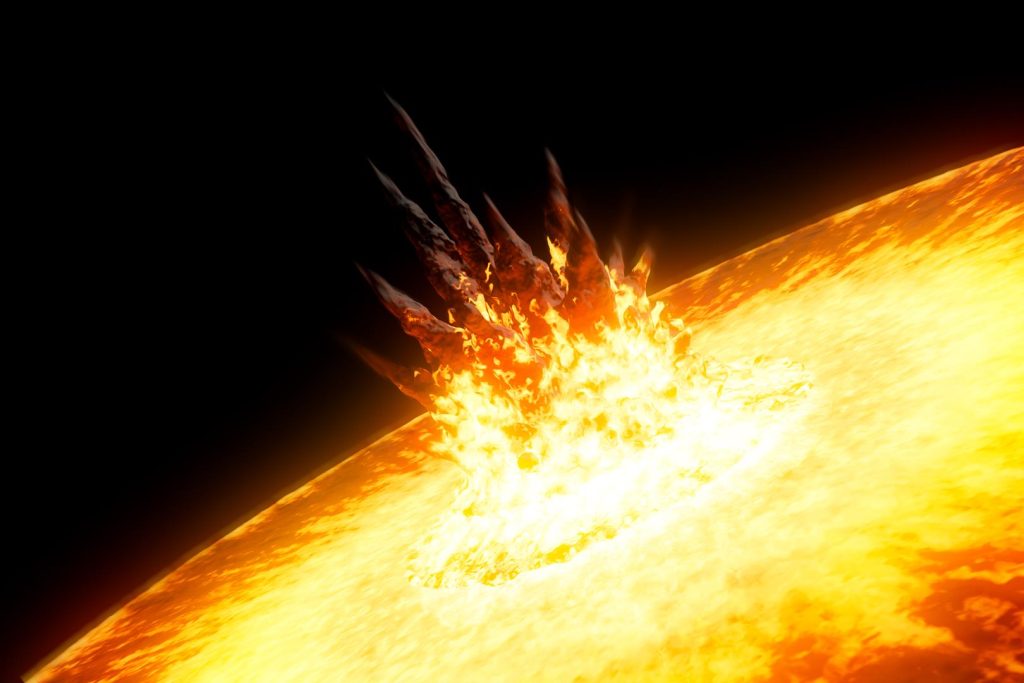
The main challenge of the coronal heating problem is understanding why the outer corona extending from the solar surface is excessively hot. Typically, as one moves away from an object, temperature decreases. However, in the case of the Sun’s corona, the opposite occurs. Formulating a theory to explain this phenomenon has been a significant challenge for the scientific community.
Theoretical Studies and Research
Scientists have proposed various theories and conducted numerous research efforts to solve the coronal heating problem. One theory suggests that magnetic fields transfer energy from the Sun’s surface to the corona. Another theory proposes that magnetic explosions occurring on the Sun’s surface are responsible for heating the corona.
Understanding the Temperature of the Solar Corona in Astrophysics: Current Research and Findings
Theoretical Studies and Research
Scientists have proposed various theories and conducted numerous research efforts to solve the coronal heating problem. One theory suggests that magnetic fields transfer energy from the Sun’s surface to the corona. Another theory proposes that magnetic explosions occurring on the Sun’s surface are responsible for heating the corona.
Interaction Between Solar Winds and Earth
The temperature of the solar corona not only influences our solar system but also affects atmospheric phenomena on Earth. Solar winds result from the interaction of high-energy particles emitted from the corona with the Earth’s atmosphere. This interaction can lead to geomagnetic storms and auroras.

